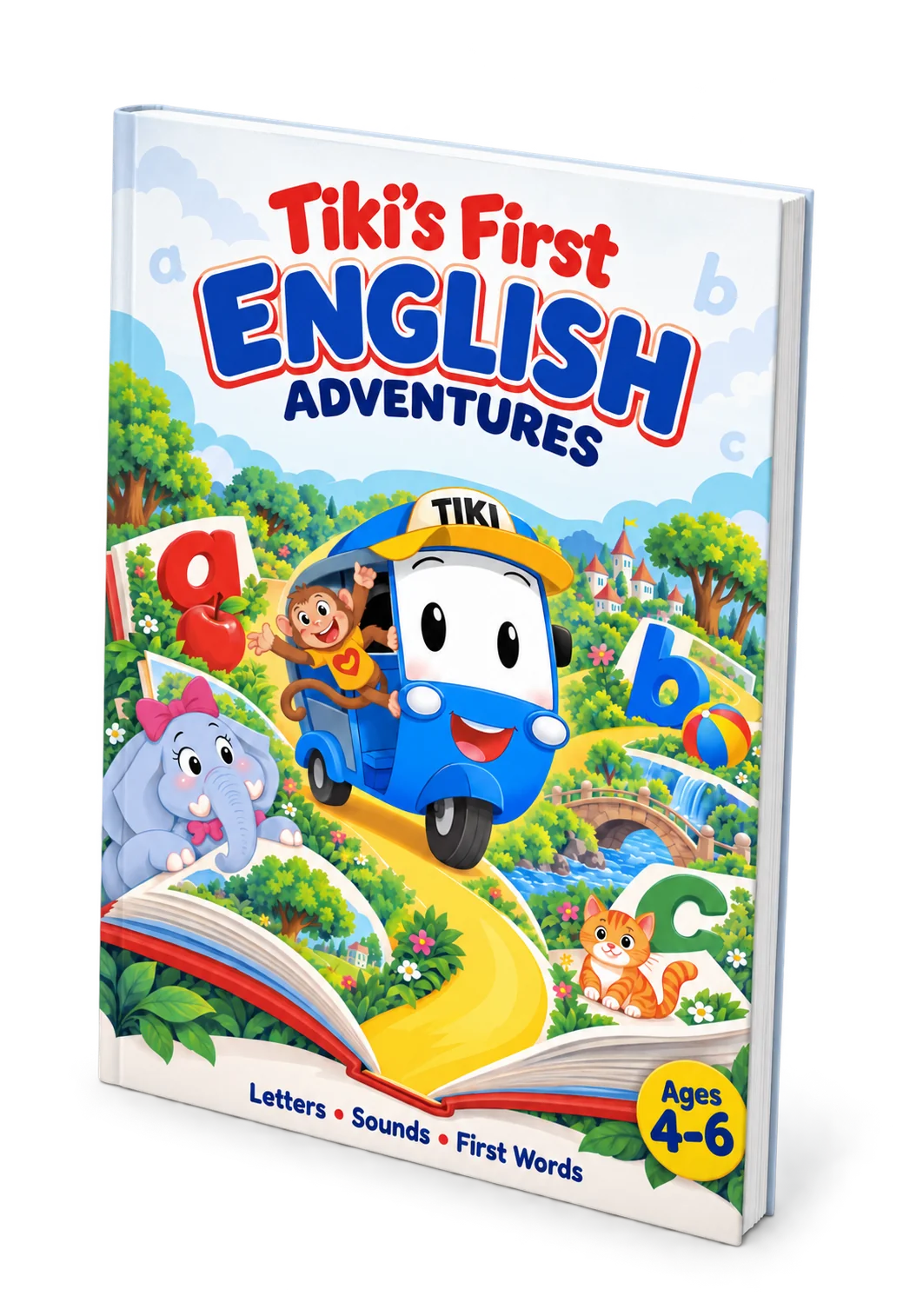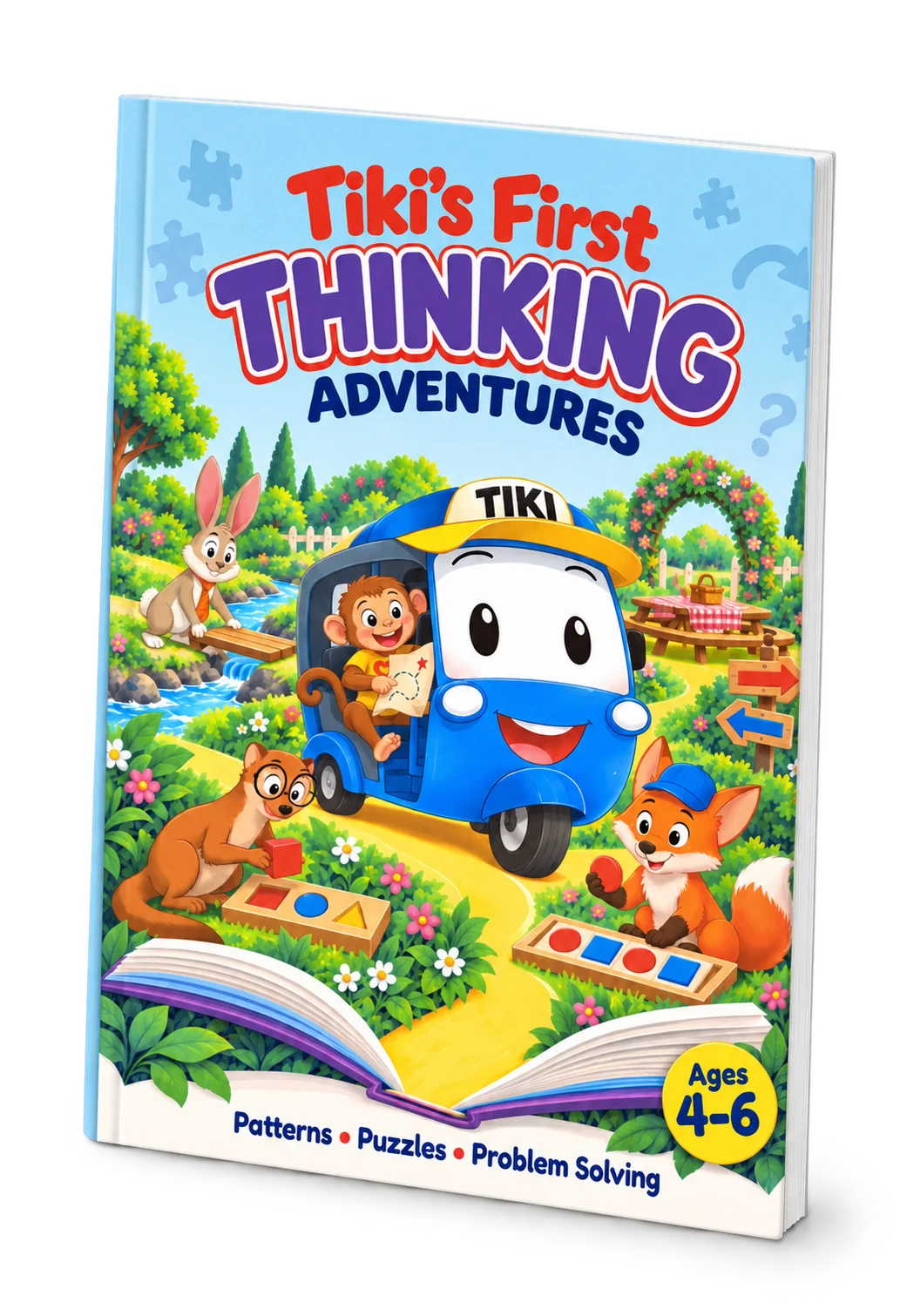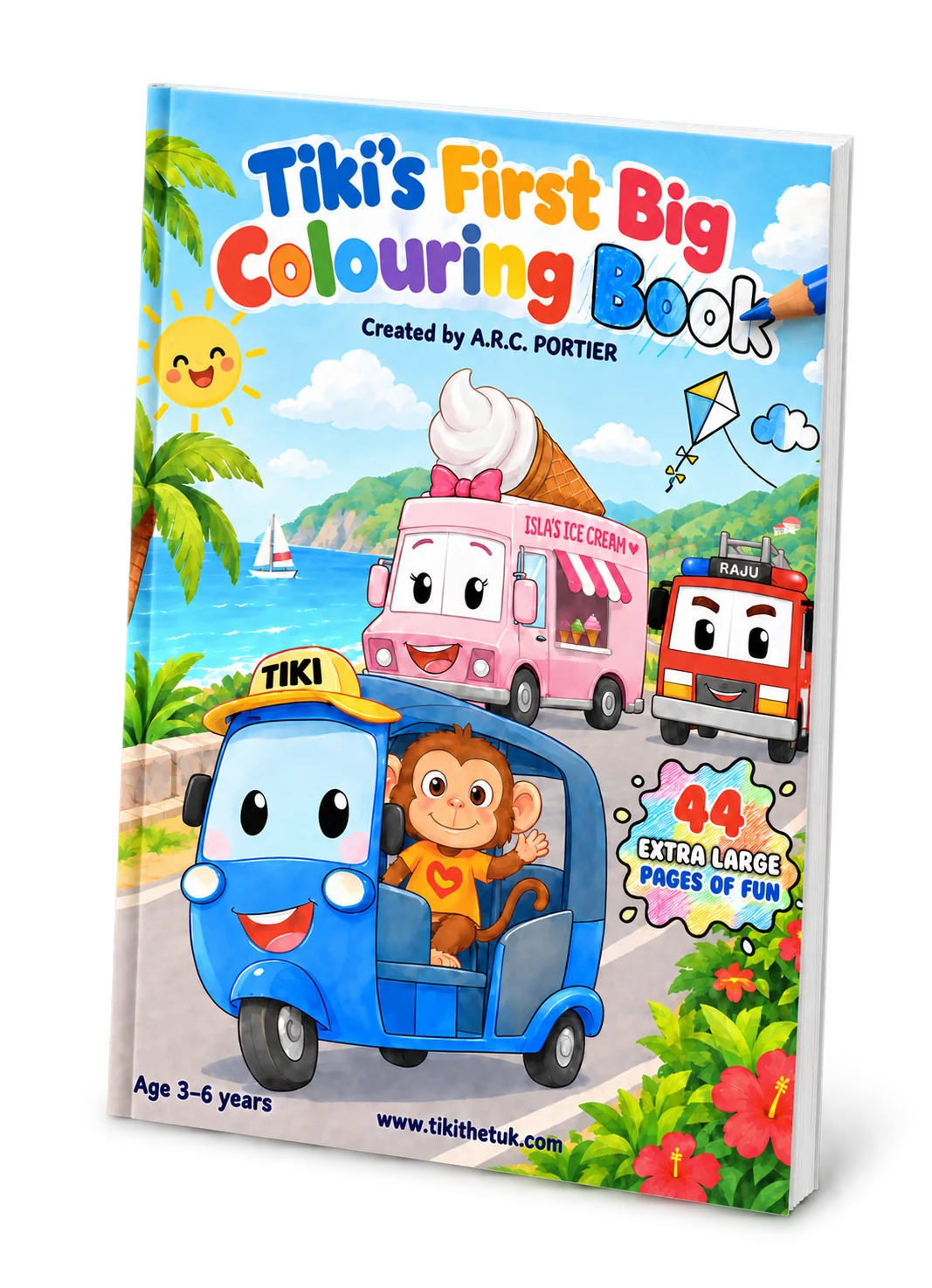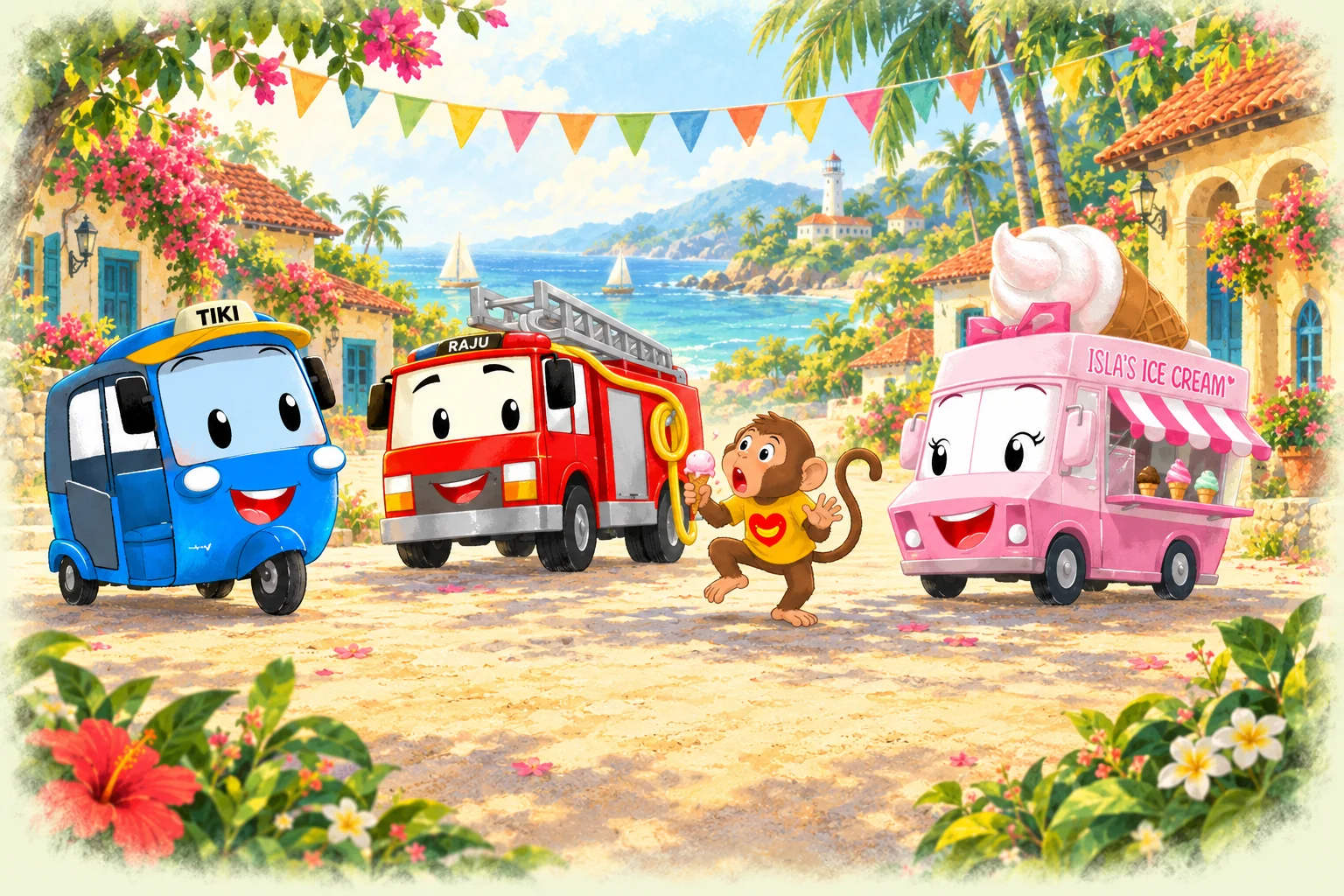
You do not need to turn the living room into a classroom to make space for English. Choose one small activity and a moment when you and your child are comfortable. Here is a ten-minute plan built around a pretend tuk-tuk delivery.
Treat the timings as a loose guide. Stop sooner if your child has had enough, or return to the same game another day. Let your child’s interest set the pace.
Start with a manageable amount
The British Council suggests keeping English sessions short and varied, with around 10–15 minutes for very young children. Our plan uses that as a starting point, with room to change the pace and activity to suit your child.
Put three familiar, child-safe objects on a cloth: perhaps a cup, a book and a large toy. Draw a tuk-tuk on scrap paper. You do not need a printer, a special set of flashcards or an uninterrupted afternoon.
Minutes 1–2: choose the delivery
Place the paper tuk-tuk beside the objects and announce a delivery. Say the name of each object once as you touch it. Let your child choose what the tuk-tuk should carry by pointing, moving the object or saying a word.
You can offer two choices: “The cup or the book?” Follow the choice with a short response such as “The book. Here we go!” Leave space for your child to join in without asking them to copy every sentence.
Minutes 3–5: make the journey
Use two cushions as a starting point and a destination. Move the drawing between them, carrying the pretend delivery. Say “go” as it moves and “stop” when it arrives. Then hand the drawing to your child and let them decide when it stops.
Add a funny complication: the toy passenger has fallen asleep, or the book needs to go back home. A familiar word can become part of several turns without needing a new activity each time. Use your home language freely to build the story.
Minutes 6–10: draw it, then finish
Draw the destination together. It can be a shop, a house or an entirely imaginary place. Add one thing from the journey and name it. If your child wants to draw a giant purple cup, let that become the delivery.
For the final minute, ask which object should travel next time. Put the drawing somewhere your child can find it again. There is no need for a score or a worksheet to prove the game happened.
Make the next session your own
Keep the same route and change only the cargo: a hat, a bag or something you have drawn. If the game feels too busy, use a single destination. If your child wants more language, describe the cargo together: “a red bag” or “a big book”.
Teachers can try the journey in pairs, with one child choosing and the other delivering. Give both children a turn and accept gestures alongside words. At home, an older sibling can draw the map while a younger child drives. Tiki’s activity and colouring books are coming soon; this game needs only the things you already have.
Sources & further reading
The original research and parent guidance used in this article, with dates and context.
- Keep English sessions short and variedBritish Council LearnEnglish Kids · Parent guidance accessed 10 October 2026.